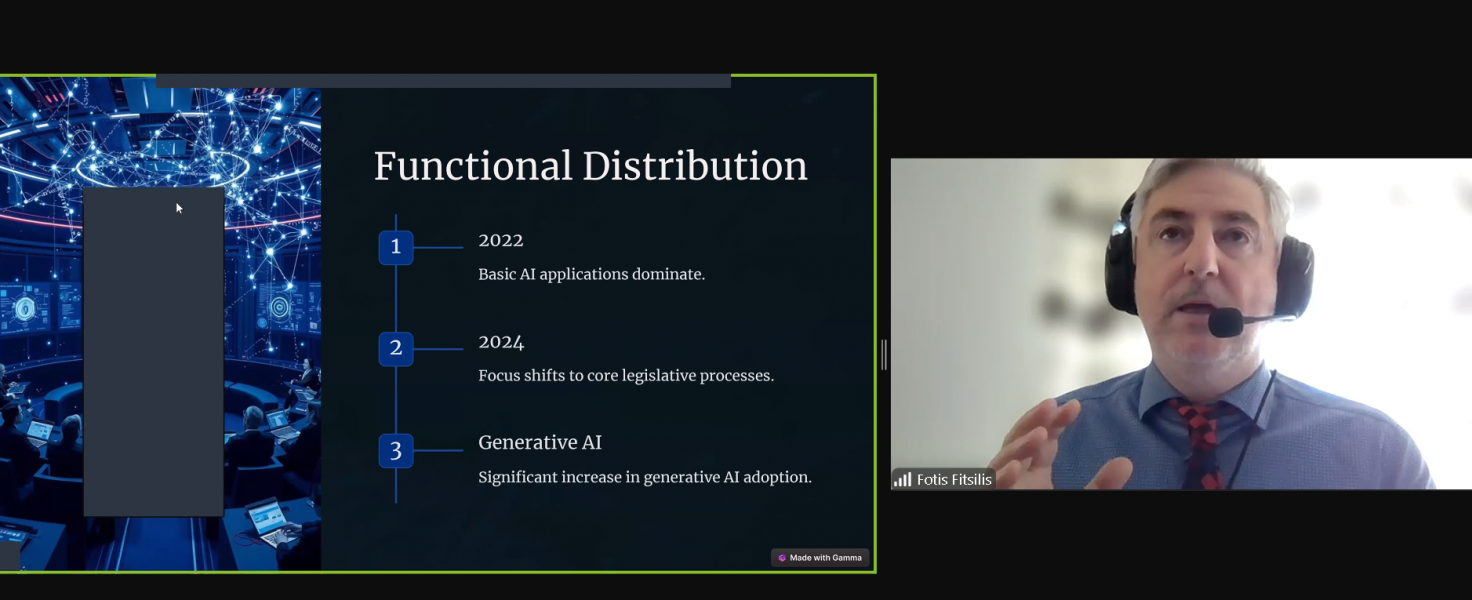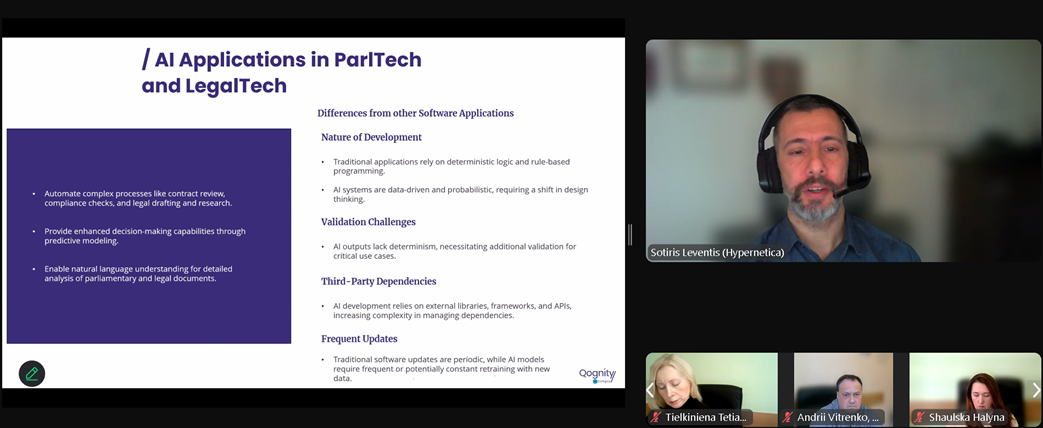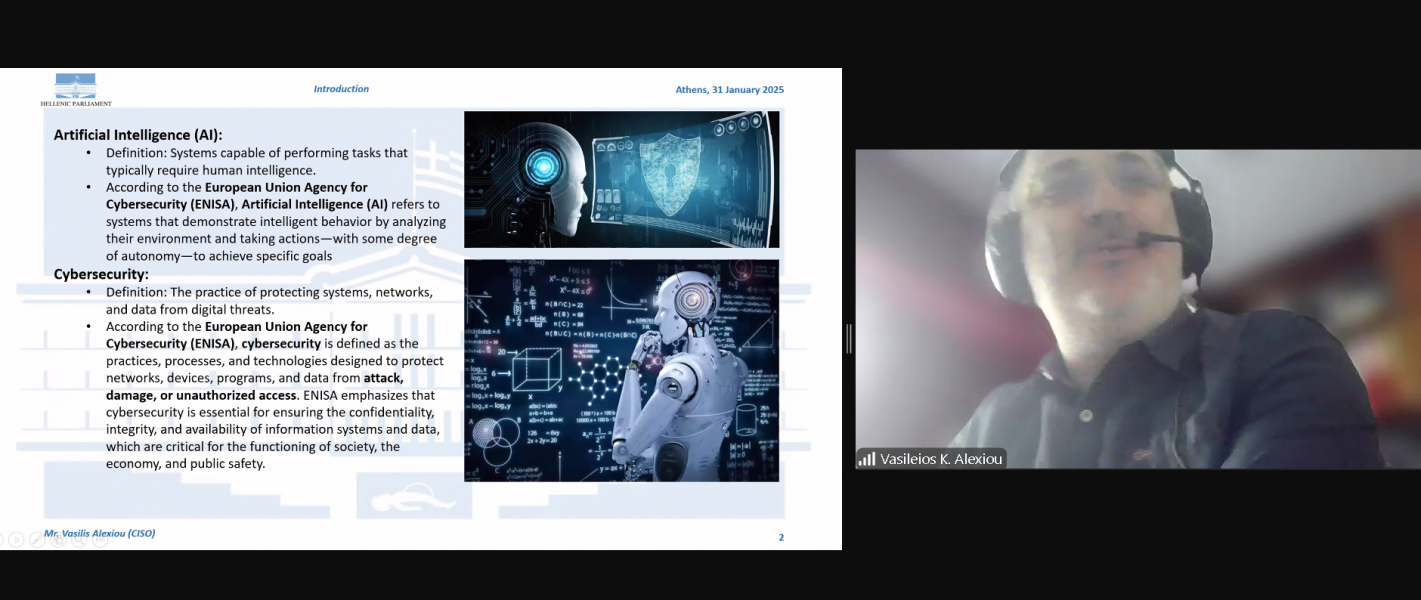
The distinguished speakers included Dr. Fotis Fitsilis, Head of the Department for Scientific Documentation and Supervision at the Scientific Service of the Hellenic Parliament; Mr. Vasileios Alexiou, Chief Information Security Officer at the Hellenic Parliament; and Sotiris Leventis, Chief Executive Officer of Qognity from the Republic of Cyprus.
During the webinar, the speakers presented practical cases of AI implementation in parliamentary work and discussed key aspects of its integration into the legislative process. Participants had the opportunity to explore modern approaches to utilizing AI for legislative analysis, forecasting the implications of regulatory acts, and automating the processing of large volumes of information. Special emphasis was placed on ethical considerations in AI application, including the necessity of ensuring algorithmic transparency and accountability in parliamentary work.
A significant part of the discussion focused on the challenges of cybersecurity and the protection of confidential data during the digital transformation of parliamentary structures. Experts highlighted the risks associated with AI, such as its potential misuse for disinformation, manipulation, and influencing political decision-making. They also presented effective strategies to mitigate these threats, including the implementation of clear cybersecurity policies, staff training, and strict oversight of AI usage in government institutions.
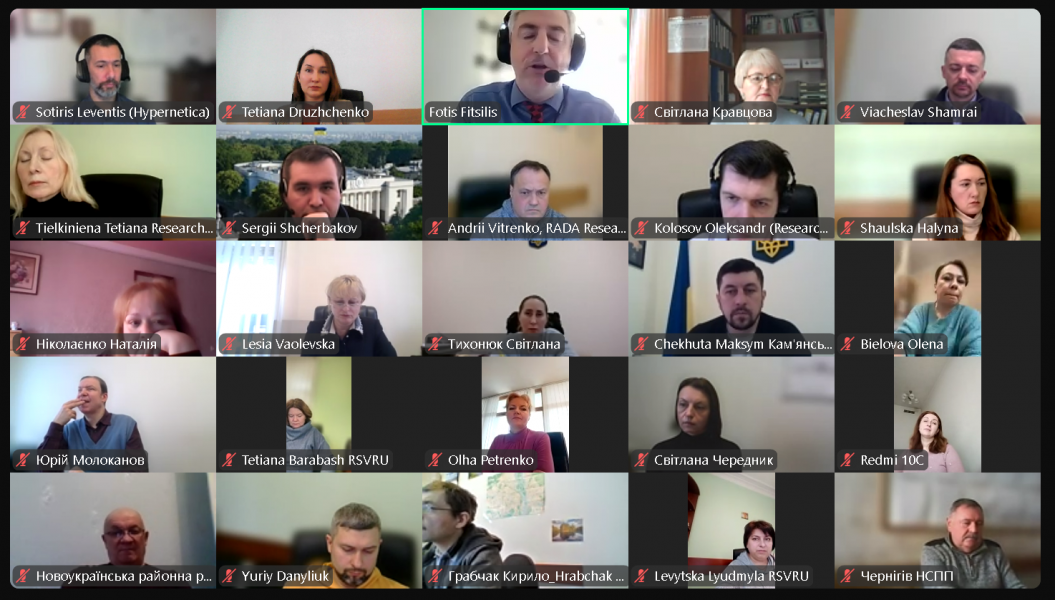
This webinar was part of the Research Service’s broader initiative aimed at enhancing the digital competence of Ukrainian legislators and optimizing the use of modern technologies in the legislative process. Strengthening the digital literacy of Members of Parliament and their consultant aides will facilitate more effective AI-driven analytical work, improve communication with citizens, and streamline routine administrative tasks.
The event demonstrated the increasing interest of Ukrainian legislators in technological solutions that enhance the efficiency of parliamentary work and contribute to greater transparency in the legislative process.
The simultaneous interpretation of the webinar was made possible with the support of the EU project 'Association4U,' ensuring accessibility for a wide audience.