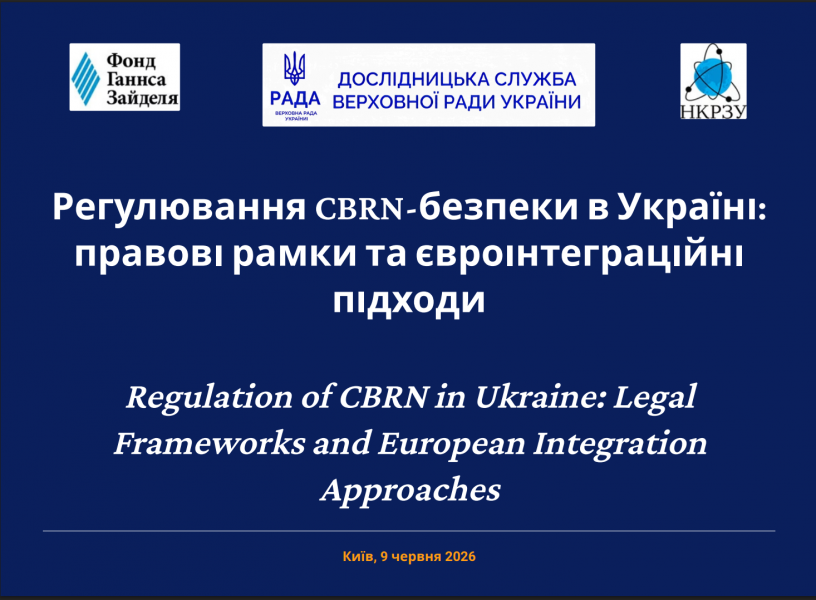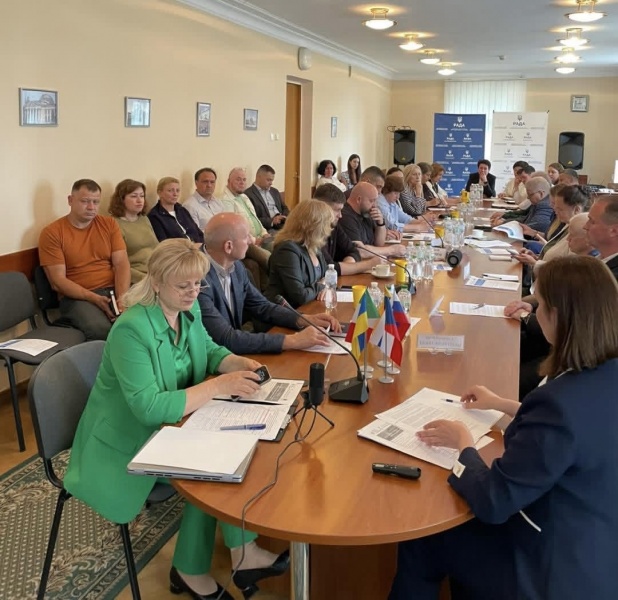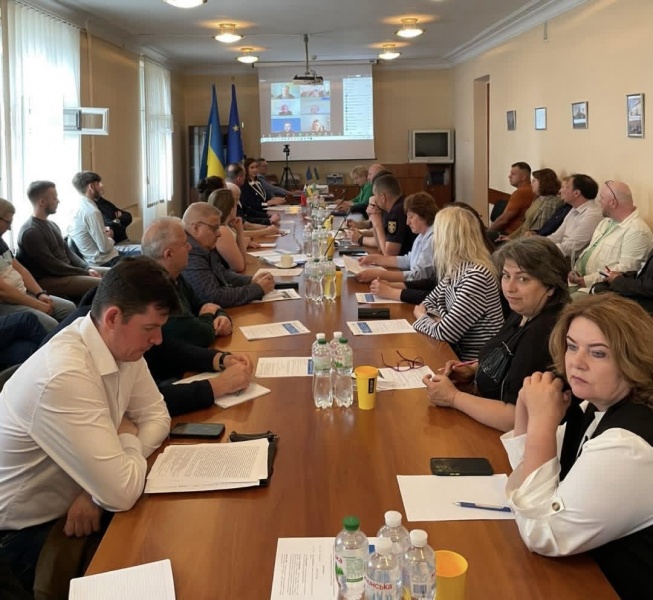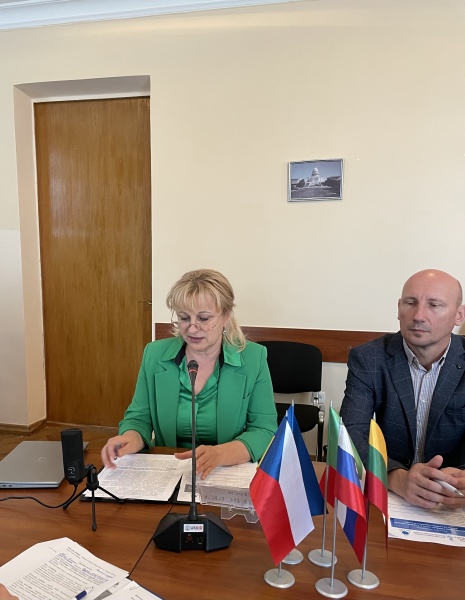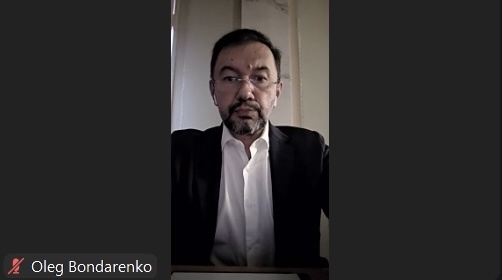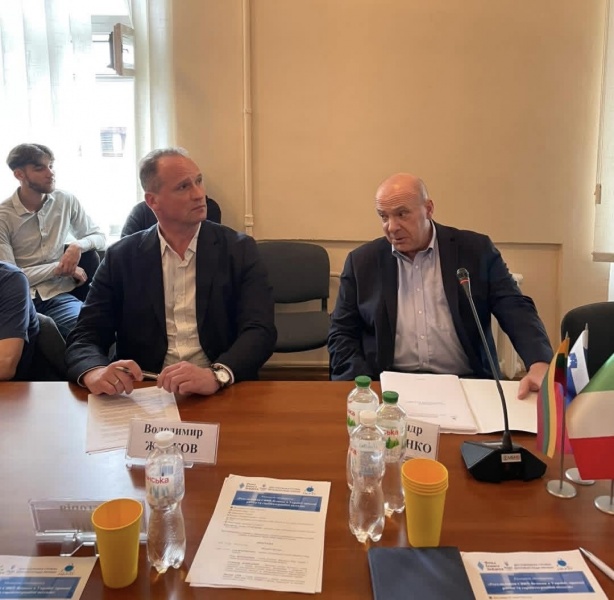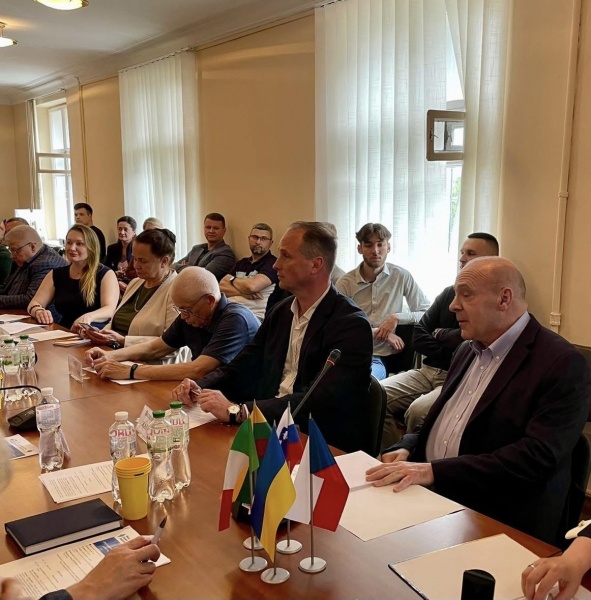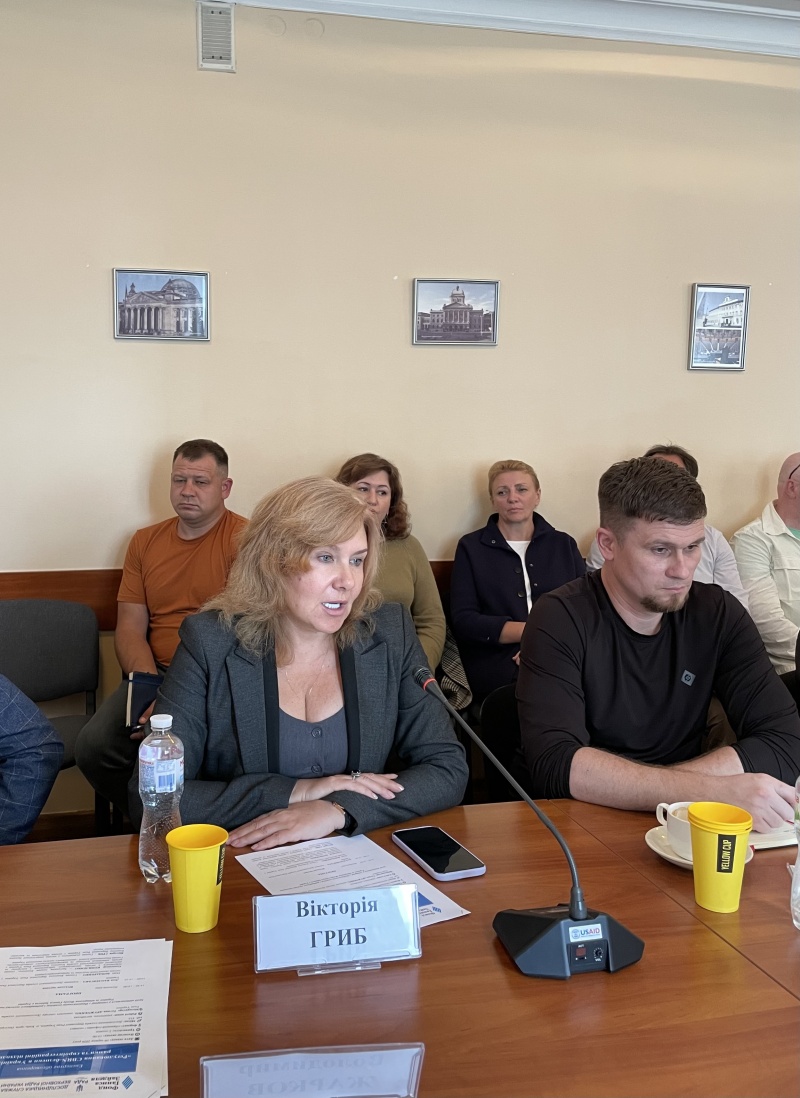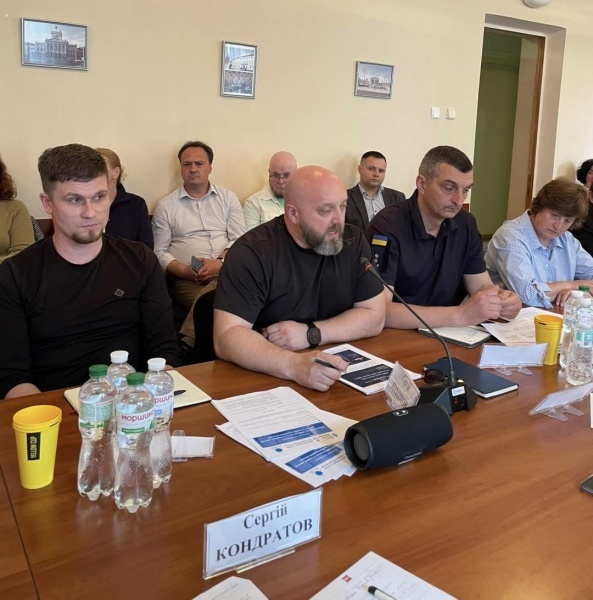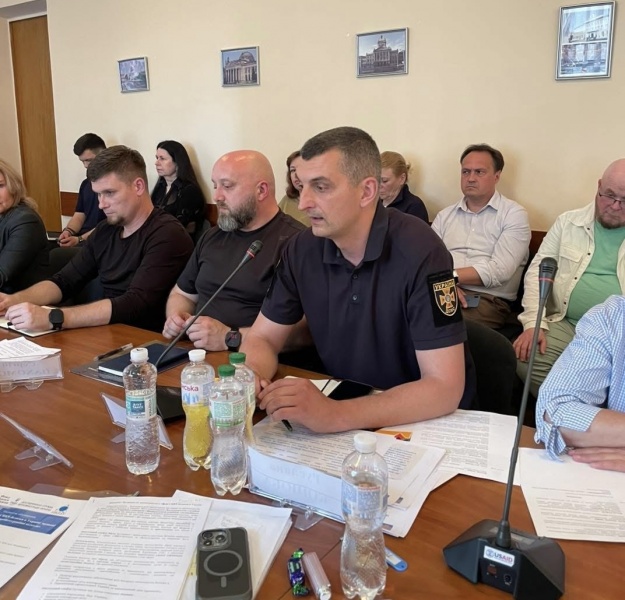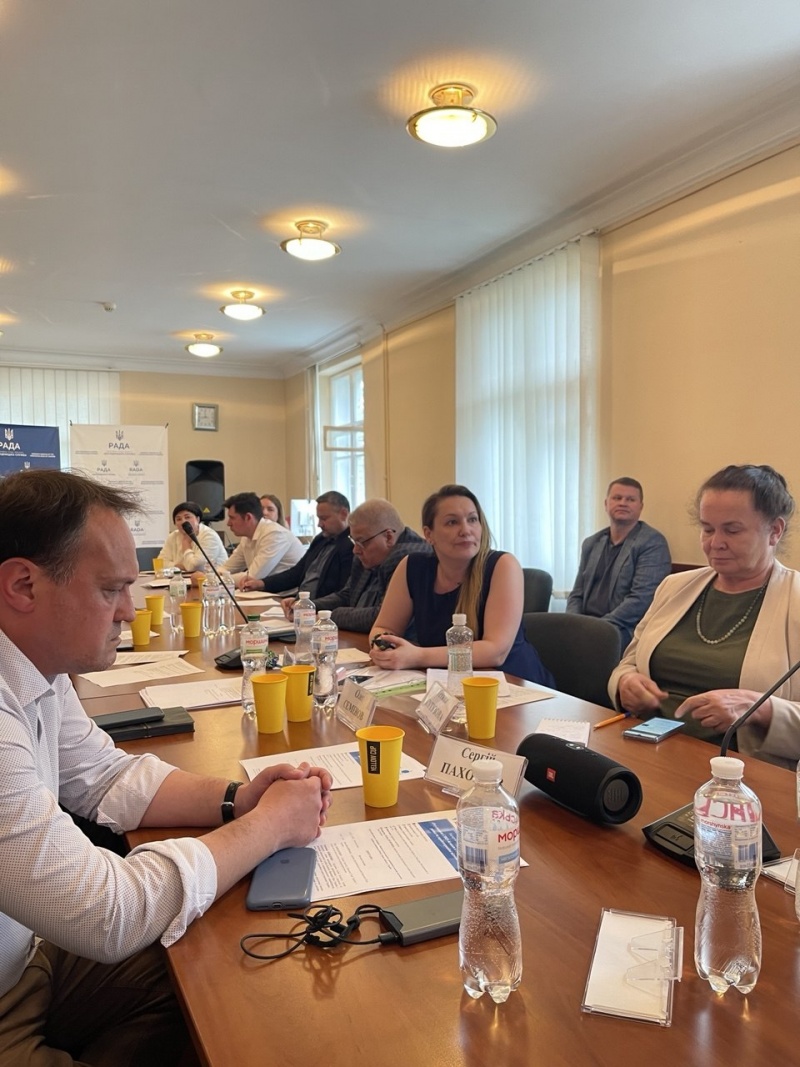
On June 9, 2026, the Research Service of the Verkhovna Rada of Ukraine, in cooperation with the National Commission for Radiation Protection of the Population of Ukraine and with the support of the Hanns Seidel Foundation in Ukraine, held an expert discussion on the topic “Regulation of CBRN Security in Ukraine: Legal Framework and European Integration Approaches”. The event brought together representatives of government agencies, international organizations, scientific institutions, the expert community, and parliamentary research services.
Welcoming remarks were delivered by Lesya VAOLEVSKA, Head of the Research Service of the Verkhovna Rada of Ukraine; Oleh BONDARENKO, Chair of the Verkhovna Rada Committee on Environmental Policy and Nature Management; and the Deputy Chairman of the Committee, Chairman of the Subcommittee on Legislative Support and Oversight of the Diplomatic Service of the Verkhovna Rada Committee on Foreign Policy and Interparliamentary Cooperation, Chairman of the National Commission for Radiation Protection of the Population of Ukraine Oleksandr KOPYLENKO, Chairman of the Subcommittee on Energy Security of the Verkhovna Rada of Ukraine on Energy, Housing and Communal Services, Viktoria Hryb, as well as the Head of the Central and Eastern Europe Department of the Hanns Seidel Foundation, Benjamin Bobbe, who emphasized the need to strengthen the state capabilities in the field of chemical, biological, radiological, and nuclear security and to improve national legislation in accordance with European standards.
The expert discussion addressed issues related to the legal regulation of CBRN security, interagency coordination, emergency response, and the state institutions readiness to address contemporary security challenges. Representatives of the Armed Forces of Ukraine, the State Emergency Service, the State Nuclear Regulatory Inspectorate of Ukraine, the National Institute for Strategic Studies, and the Research Service of the Verkhovna Rada of Ukraine presented assessments of the current state of the CBRN security system and outlined prospects for its development. Participants showed considerable interest in the presentation of the Guide to CBRN Security Legislation in Ukraine (the text of the Guide is available at:
https://research.rada.gov.ua/documents/analyticRSmaterialsDocs/nscur_defense/Guide_lg-nb/77679.html
Representatives of international organizations and relevant agencies from the Czech Republic, Slovenia, Italy, and Lithuania: the United Nations Interregional Crime and Justice Research Institute (UNICRI), the State Office for Nuclear Safety of the Czech Republic, the Nuclear Safety Administration of the Republic of Slovenia, the Research Service of the Chamber of Deputies of the Italian Republic, and the Radiation Protection Center of the Republic of Lithuania, as well as the European Commission’s Directorate-General for Migration and Home Affairs (DG HOME)—shared best practices for risk prevention and response to CBRN threats.
Following the discussion, participants noted the importance of harmonizing Ukrainian legislation with EU law, strengthening interagency cooperation, and developing international cooperation as key prerequisites for ensuring national security and Ukraine’s fulfillment of its European integration commitments.
The expert discussion served as an important platform for professional dialogue among representatives of government agencies, the scientific community, international partners, and the expert community; it facilitated the exchange of experience and best practices, as well as the development of proposals for further improving the legal framework for CBRN security in Ukraine in accordance with European standards.
A key feature of this event was the combination of three interrelated components:
-Analytical output – the preparation and presentation of the Guide to CBRN Security Legislation.
-Expert validation – discussion of the findings with representatives of government agencies, academics, and international experts.
- International experience transfer – familiarization with the practices of the EU and international organizations for further use in legislative activities.
The presentations by the speakers at the expert discussion are available at:
Serhiy Pakhomov (Deputy Commander of the Radiological, Chemical, and Biological Defense Forces, Support Forces Command of the Armed Forces of Ukraine)
CBRN protection of troops (forces) as a component of Ukraine’s CBRN security
https://research.rada.gov.ua/uploads/documents/34315.pdf
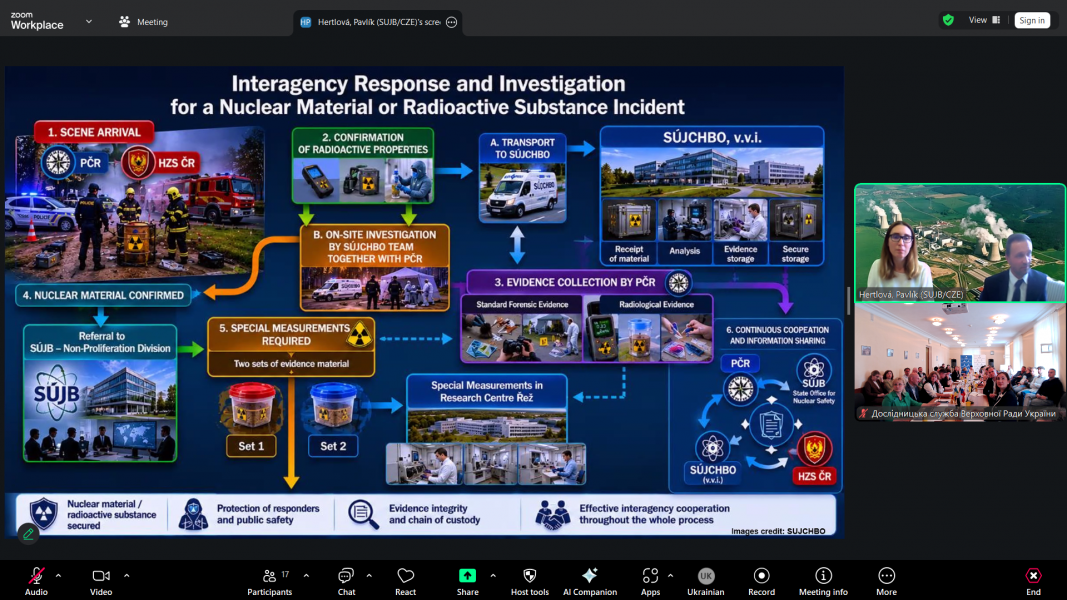
Lucie Härtlová (Head of the Legal Department of the State Office for Nuclear Safety of the Czech Republic)
CBRN Regulation in the Czech Republic within the Competence of the State Office for Nuclear Safety
https://research.rada.gov.ua/uploads/documents/34310.pdf
Igor Sirc (Director of the Nuclear Safety Administration of the Republic of Slovenia, Ministry of Natural Resources and Spatial Planning of the Republic of Slovenia)
The Republic of Slovenia’s Experience in Regulating Nuclear Safety Issues
https://research.rada.gov.ua/uploads/documents/34311.pdf
Aneta Bogdanovich (Senior Specialist, Radiation Emergency Management Division, Radiation Protection Center (Republic of Lithuania)
Preparedness and Response to a Nuclear or Radiological Emergency in Lithuania
https://research.rada.gov.ua/uploads/documents/34312.pdf
Nicola Giovanni Cezzi (Parliamentary Advisor, Head of the Industry Division of the Research Service of the Chamber of Deputies of the Italian Republic)
Regulation of CBRN Safety in Italy: Legal Framework and Current Developments
https://research.rada.gov.ua/uploads/documents/34313.pdf
Tetyana Kutuzova (Head of the Emergency Preparedness and Radiation Protection Division—State Inspector of the Department for Nuclear Facility Safety, State Nuclear Regulatory Inspectorate of Ukraine)
Current Issues of Nuclear Safety and Radiation Protection in Ukraine in the Context of Response Readiness
https://research.rada.gov.ua/uploads/documents/34314.pdf
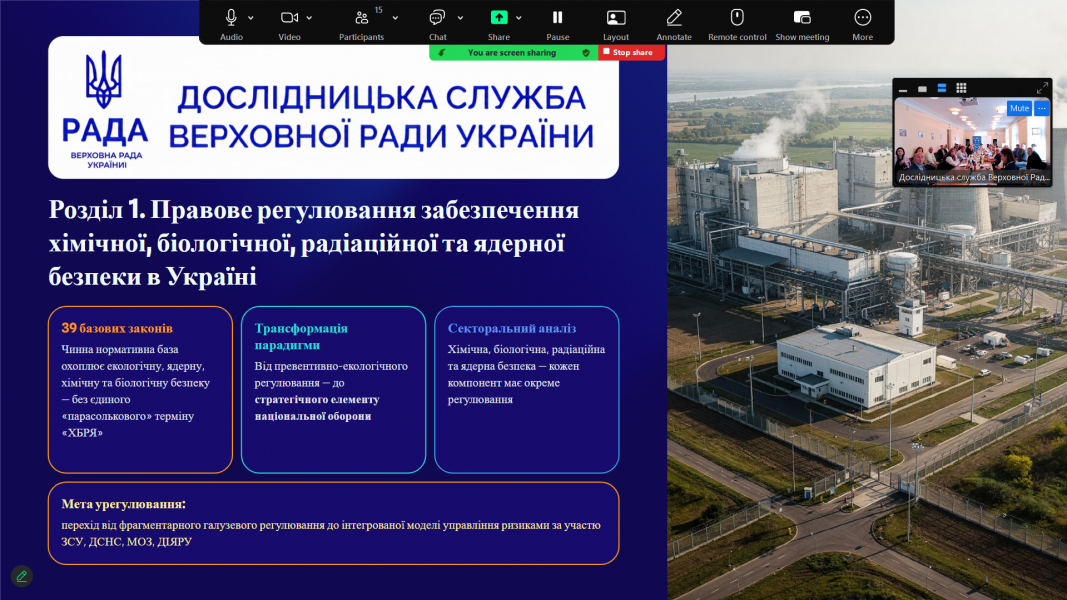
Ruslana Kotsyuba (Chief Consultant, Department of National Security and Law Enforcement, Research Service of the Verkhovna Rada of Ukraine)
Presentation of the Guide to CBRN Security Legislation in Ukraine
https://research.rada.gov.ua/uploads/documents/34323.pdf